



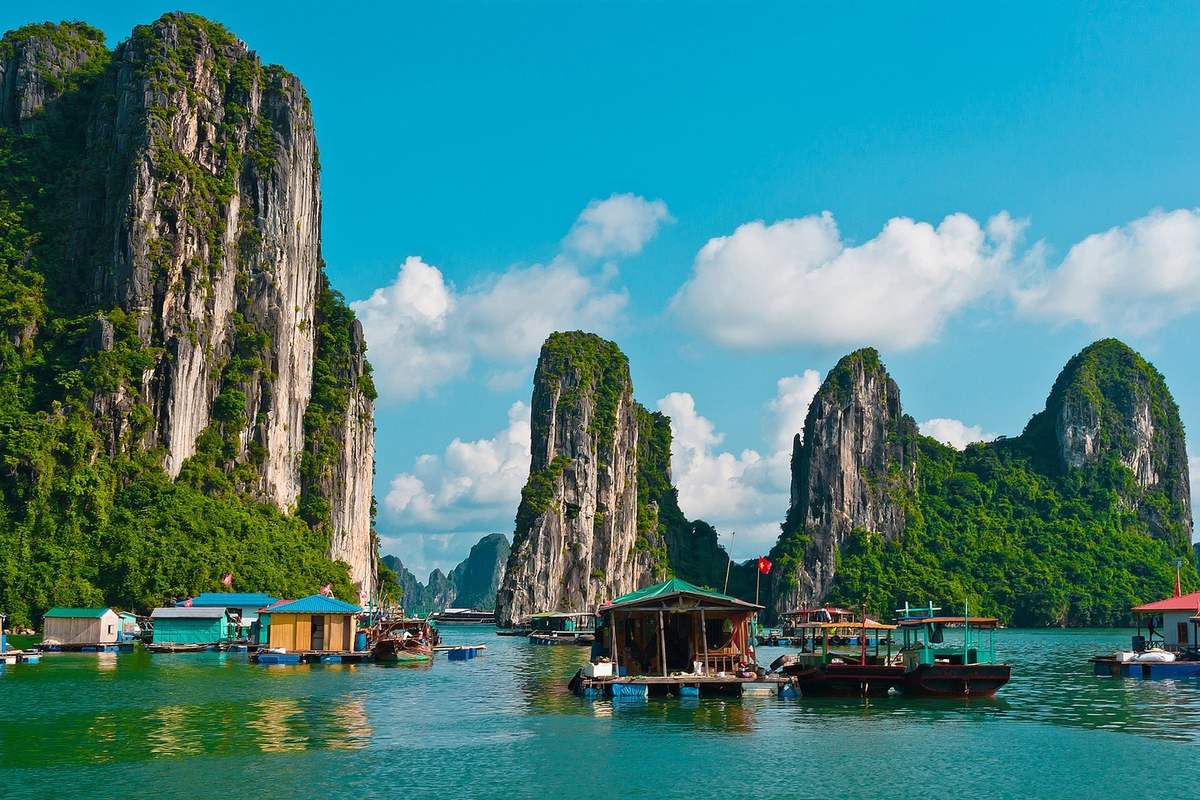
Vung Vieng Fishing Village is one of the cultural destinations associated with the traditional fishing communities of Bai Tu Long Bay. Surrounded by limestone formations and calm water, the area provides a different perspective on a landscape usually known primarily for its natural beauty.
A visit to Vung Vieng is not simply about seeing floating structures on the water. It offers travelers an opportunity to learn how fishing communities historically adapted their lives to the marine environment, from transportation and fishing to the distinctive culture shaped by generations living around the bay.
For travelers seeking an authentic Vietnam experience, Vung Vieng adds an important cultural dimension to a Bai Tu Long Bay cruise.
Where Is Vung Vieng Fishing Village?
Vung Vieng Fishing Village is located in Bai Tu Long Bay, Quang Ninh Province, northeast of the central Ha Long Bay area.
The village area is surrounded by limestone islands that create a naturally sheltered water environment. This geography historically provided favorable conditions for fishing communities to live and work on the bay.
Unlike mainland villages connected by roads, traditional floating communities depended heavily on boats for transportation. Homes, fishing activities, and everyday life were closely connected to the surrounding water.
Today, Vung Vieng is primarily experienced as a cultural tourism destination rather than simply a residential village. Changes in conservation and resettlement policies have moved many families to mainland communities, while the area’s fishing heritage remains an important part of the visitor experience.

For this reason, travelers should understand Vung Vieng as a place where the cultural memory of a floating fishing village Vietnam can still be explored within the landscape where that way of life developed.
What Makes Vung Vieng Fishing Village Special?
Bai Tu Long Bay is famous for limestone scenery, but Vung Vieng shows that the bay also has a human history.
Its appeal comes from the relationship between people and the marine environment.
Traditional fishing culture
For generations, fishing communities in the Ha Long–Bai Tu Long region developed ways of living closely connected to the sea.
Fishing was not simply an occupation. Boats, nets, aquaculture, weather knowledge, tides, and navigation formed part of everyday life.

Visiting a bai tu long fishing village therefore adds context to the surrounding scenery.
The limestone islands are no longer just a beautiful backdrop. Travelers begin to understand how the sheltered waters between them influenced settlement, transportation, and livelihoods.
A peaceful landscape surrounded by limestone islands
The geographical setting is another reason to visit Vung Vieng.
Limestone formations surround the water, helping create a sheltered and visually distinctive environment. Small boats moving across the calm surface contrast with the scale of the cliffs rising around them.
Compared with sightseeing from a larger cruise vessel, exploring the area from a smaller boat brings travelers much closer to the landscape.
This slower pace is particularly suited to visitors interested in local culture bai tu long rather than simply checking famous landmarks off an itinerary.
What to Do at Vung Vieng Fishing Village
A visit to Vung Vieng Fishing Village is generally not built around large attractions or entertainment facilities.
The experience is intentionally simple: move slowly through the area, observe the landscape, and learn about the cultural relationship between local communities and the bay.
Explore by bamboo boat
One of the most relaxing ways to discover the Vung Vieng area is by traditional bamboo boat.
Instead of navigating the water independently, guests sit aboard a small boat while a local boat operator takes them through the sheltered surroundings.

The slow movement provides time to observe limestone formations, floating structures, and the wider landscape.
For families, couples, and travelers who prefer not to kayak, the bamboo boat is also a comfortable way to experience the water at close range.
Kayak through the surrounding area
Where permitted by the itinerary and operating conditions, kayaking provides a more active alternative.
Travelers can paddle through calm sections of the bay and experience the limestone environment from water level.
Kayaking also offers greater freedom to observe small details in the landscape that are difficult to notice from the main cruise vessel.
Guests should always wear the required safety equipment and follow instructions from their cruise crew or guide.
Learn about local fishing heritage
The most important part of visiting Vung Vieng is understanding the culture behind the landscape.
Travelers can learn about traditional fishing methods, aquaculture, boats, floating structures, and the ways families historically organized daily life on the water.
This transforms the excursion from a simple photo stop into a more meaningful cultural experience.
It is also worth recognizing that traditional floating life has changed considerably. Tourism should not present Vung Vieng as a community frozen in the past, but as part of a living cultural history that continues to evolve.
Is Vung Vieng Still a Floating Fishing Village?
This is an important question for travelers researching Vung Vieng Fishing Village before their trip.
Historically, fishing families lived directly on the water in floating homes and relied on the bay for their livelihoods.
However, conservation, environmental management, education, and resettlement policies have changed the structure of floating communities across the Ha Long–Bai Tu Long region. Many residents have relocated to the mainland.
As a result, visitors should not expect to encounter a large traditional residential community living exactly as it did decades ago.
What remains valuable is the cultural heritage connected to the fishing village, the landscape where that history developed, and tourism experiences that help visitors understand the relationship between local communities and the bay.
This distinction makes the experience more authentic rather than less meaningful.
Vung Vieng vs Cua Van Fishing Village
Travelers researching fishing villages in northern Vietnam may encounter both Vung Vieng and Cua Van.
Although both are associated with traditional fishing culture, they belong to different cruising areas.
| Experience | Vung Vieng | Cua Van |
|---|---|---|
| Location | Bai Tu Long Bay | Ha Long Bay area |
| Main appeal | Fishing heritage and quiet scenery | Fishing heritage and cultural landscape |
| Typical experience | Bamboo boat, kayaking, cultural exploration | Bamboo boat and cultural exploration |
| Suitable for | Bai Tu Long itineraries | Central/extended Ha Long itineraries |
| Atmosphere | Generally quieter | More established tourism attraction |
Neither village needs to be considered “better.”
The more practical question is which one fits your cruise route. Travelers exploring Bai Tu Long Bay will find Vung Vieng naturally connected to the surrounding itinerary.
How to Visit Vung Vieng Fishing Village
Because Vung Vieng is located within the bay, visitors generally reach the area as part of a cruise rather than traveling independently by road.
An overnight Bai Tu Long Bay cruise is one of the most convenient options.

The main cruise vessel typically reaches the designated area before guests transfer to a smaller boat for the excursion. Depending on the itinerary, visitors may explore by bamboo boat, kayak, or another permitted means.
Exact activities and access can change according to weather, tides, local regulations, and cruise operations.
For this reason, travelers who specifically want to visit Vung Vieng Fishing Village should check the current itinerary before booking.
Visit Vung Vieng with Emperor Cruises
For travelers looking to combine cultural exploration with a boutique cruise experience, Emperor Cruises offers journeys through Bai Tu Long Bay aboard Emperor Cruises Legacy Halong.
With only 10 suites, the vessel emphasizes privacy, personalized hospitality, and a slower style of travel.
A visit to Vung Vieng complements this approach particularly well.
Rather than treating the bay only as a scenic destination, travelers can connect the natural landscape with the stories of people who have lived and worked around these waters.
After the excursion, guests return to the vessel to continue exploring Bai Tu Long Bay, enjoy dining onboard, relax on the sundeck, and experience the landscape through different periods of the day.
Vung Vieng’s inclusion is subject to the confirmed operating itinerary, so guests should check current excursion details with Emperor Cruises before departure.
Other Experiences to Combine with Vung Vieng
A visit to Vung Vieng can form part of a broader Bai Tu Long Bay itinerary.
Depending on the selected cruise and operating conditions, travelers may combine the fishing village with:
- Kayaking: Explore limestone formations and quieter sections of the bay at water level.
- Cave exploration: Discover the geological landscape inside one of Bai Tu Long Bay’s limestone caves.
- Sunset cruising: Return to the vessel and enjoy late-afternoon views across the bay.
- Vietnamese dining: Experience local and Vietnamese-inspired cuisine onboard.
- Overnight stay: Spend the evening surrounded by the limestone landscape rather than returning to the harbor after a day trip.
Combining natural and cultural experiences creates a more complete understanding of Bai Tu Long Bay.
Best Time to Visit Vung Vieng Fishing Village
Vung Vieng can be visited at different times of the year when weather and cruise operations permit.
March to May generally offers warmer temperatures suitable for outdoor activities. June to August is hot and humid, with a higher possibility of rain and tropical weather. September to November often provides comfortable conditions for sightseeing and kayaking, while December to February brings cooler temperatures and occasional mist.
Because the excursion takes place on the water, weather conditions can directly affect activities.
Cruise operators may adjust itineraries for safety reasons, so some flexibility is important.
Tips for Visiting Vung Vieng
Before visiting Vung Vieng Fishing Village, travelers should keep several practical points in mind:
- Wear comfortable, lightweight clothing.
- Use sunscreen, sunglasses, and a hat during sunny weather.
- Wear a life jacket during bamboo boat or kayaking activities.
- Bring waterproof protection for phones and cameras.
- Follow instructions from local boat operators and cruise staff.
- Do not leave waste in the bay.
- Respect local culture and avoid treating fishing heritage simply as a photo backdrop.
- Confirm the current excursion itinerary before booking.
Responsible tourism is particularly important in environments where natural conservation and cultural heritage are closely connected.
FAQs About Vung Vieng Fishing Village
Where is Vung Vieng Fishing Village?
Vung Vieng is located in Bai Tu Long Bay, Quang Ninh Province, northeastern Vietnam.
Can you still visit Vung Vieng Fishing Village?
Vung Vieng remains part of tourism itineraries in Bai Tu Long Bay, although access and activities depend on current local regulations and cruise operations.
Do people still live in Vung Vieng?
Traditional floating communities in the region have changed significantly as many residents have been relocated to mainland areas. Visitors today primarily experience the area’s fishing heritage and cultural landscape.
What can you do at Vung Vieng?
Depending on the itinerary, travelers can explore the area by bamboo boat or kayak and learn about the traditional fishing culture associated with Bai Tu Long Bay.
Is Vung Vieng suitable for families?
Yes. Bamboo boat excursions can be particularly suitable for families, although parents should always check current safety and age requirements with their cruise provider.
How can I visit Vung Vieng with Emperor Cruises?
Check the current Bai Tu Long Bay itinerary directly with Emperor Cruises to confirm whether Vung Vieng is included in your selected departure.
Discover the Fishing Heritage of Bai Tu Long Bay
Vung Vieng Fishing Village reveals a side of Bai Tu Long Bay that cannot be understood through limestone scenery alone.
The sheltered waters, fishing heritage, traditional boats, and stories of communities who built their lives around the sea provide cultural context to one of northern Vietnam’s remarkable natural landscapes.

Exploring Vung Vieng by bamboo boat or kayak allows travelers to slow down and experience the bay from water level while learning about the human history behind the destination.
For travelers seeking an authentic Vietnam experience, Emperor Cruises combines this cultural perspective with a boutique journey through Bai Tu Long Bay aboard a vessel with only 10 suites.
Explore the current Emperor Cruises itinerary to discover Vung Vieng and other natural and cultural destinations across Bai Tu Long Bay.